Boat charter, from a half day out to a week with crew
Every type, what it costs, who it suits
Boat charter covers an enormous amount of ground for two words. It takes in a RIB hired for the afternoon, a bareboat catamaran in the Ionian, and a fully crewed gulet working along the Turkish coast with a crew of six aboard. This page is the map. It sets out what each type of boat is, the group size it fits, the money involved, and the three ways to take one: bareboat, skippered, fully crewed. If you want a few hours out of Split or Mykonos, we will tell you how to arrange it, but we are not the people to book it for you. Our work starts at a week aboard with a crew who cook, navigate and run the boat.
What does a boat charter actually cover?
The range runs from an eight-metre RIB you take out for an afternoon to a 30-metre gulet with a crew of seven. Most people arrive at the phrase without knowing which end of it they want. The list below runs smallest first, with the group size and the use that go with each. Capacity and price climb together, and not smoothly. The more people you need to sleep aboard, the fewer boats qualify, and the figure steps up rather than sliding.
The dividing line sits at overnight. Step off at sunset and you are hiring by the hour or the half day, arranged locally with the operator who owns the boat. Sleep aboard and you are into week-long bookings, a contract, a deposit and a route agreed in advance. Almost nobody works both sides of that line. Brokers, ours included, sit firmly on the second side, which is worth knowing before you send a dozen enquiries to the wrong people.
- Day boat: a few hours out and back, no cabins, booked directly with a local operator
- RIB: fast, open and wet in a chop, good for reaching one bay and returning the same day
- Sailing yacht: the cheapest way to live aboard for a week, though space below is tight
- Catamaran: stable, shallow-drafted and roomy, the usual pick for families who want deck space
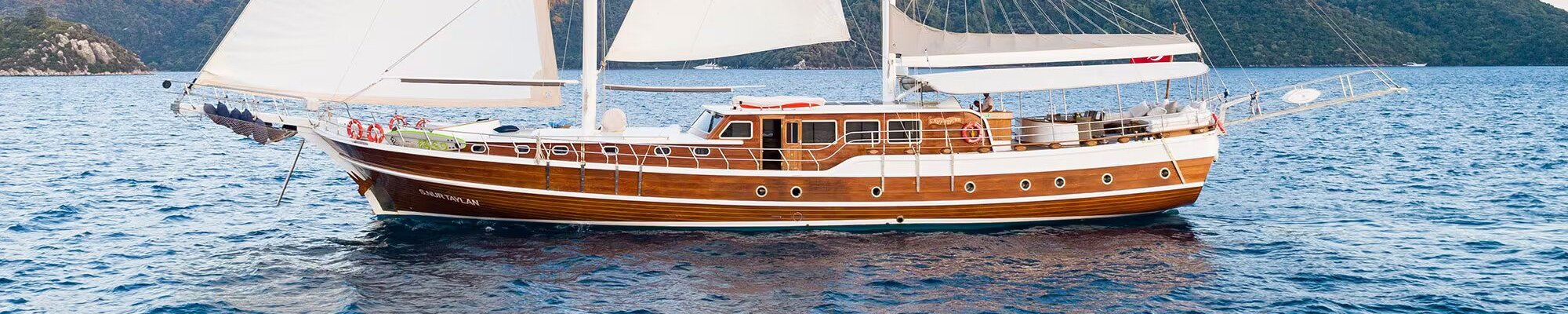
- Gulet: wide timber decks, a crew of five to seven, slow coastal cruising in Turkey and Greece
- Motor yacht: covers distance quickly, for routes with real mileage and less time at anchor
Should you book a day boat locally or through a broker?
The cheapest end of boat charter is a day boat or a RIB, and the honest answer is to book it locally. Operators run these from the quay in Split, Hvar, Mykonos and Bodrum, usually with a skipper aboard, because the boat rarely goes far. Rates are quoted by the hour or the half day. Fuel is often added at the end rather than included in the figure you were given on the phone.
We do not arrange those trips, and no brokerage adds anything useful to a three-hour outing. Search the port name plus boat hire, read the recent reviews rather than the old ones, and get it in writing whether fuel and the skipper sit inside the quoted rate. Ask what happens if the forecast turns and the trip is cancelled. Come back to us when the plan is measured in nights instead of hours.
Bareboat, skippered or fully crewed: which do you need?
Three ways to take a boat, and the difference is who carries the responsibility. On a bareboat you are the skipper. You hold the qualification, you leave a damage deposit, and every weather call is yours. A skippered week puts a professional aboard for the sailing and the local knowledge, while the shopping, the cooking and the route planning stay with you. Fully crewed hands over both jobs, and it is the only version where nobody in your group is working.
The less of the work you keep, the more the week costs. Bareboat is cheapest by some distance, and the most demanding. Crewed charters typically start around €10,000 per week, and it is the only option where the holiday begins at the passerelle. We broker crewed yachts and nothing else, so treat that as our bias, openly stated. Skippered sits in the middle and suits groups who want someone competent aboard who knows which bay holds in a meltemi, without paying for a chef as well.
- Bareboat: you skipper, you provision, you cook, and you pay the least per week
- Skippered: a professional runs the boat and knows the coast, while the galley stays yours
- Fully crewed: captain and crew aboard, meals included, nobody in your party on duty
- Licence: bareboat needs a recognised qualification, and accepted certificates differ by country
- Group size: past eight guests, crewed is usually the only realistic option on offer
Which boat suits your group size?
Group size narrows the field faster than budget does. Two couples fit comfortably on a 12-metre sailing yacht and will find a catamaran generous. Six to eight guests is where catamarans and mid-size motor yachts do their best work. Ten and above, and you are looking at gulets or larger motor yachts, almost always crewed, because nobody in a party of twelve wants to be cooking dinner at nine at night.
Cabin count matters more than length. Crewed yachts typically sleep six to twelve guests in en-suite cabins, and larger vessels reach sixteen or more. Ask for the cabin plan before you fall for the photographs. Check which cabins are doubles and which are twins, and find out where the smallest one sits, because somebody in your group is going to end up in it and would rather know in March than in August. On a gulet, the crew cabins come out of the same hull, so a boat that looks enormous from the quay may still be a six-cabin boat.
Greece, Croatia, Turkey or Italy: where does each one suit?
The Greek islands are the default, and for good reason. Short hops between anchorages, hard summer wind in the Cyclades, calmer water in the Ionian, and enough islands that two weeks never repeat themselves. A crewed gulet week in Greece is typically €20,000 to €45,000, and the figure moves with the yacht and the month. Croatia has the tightest coastline of the four, Split down to Dubrovnik with islands the whole way, and it suits anyone who wants a town to walk into most evenings.
Turkey is where the Blue Cruise began, and a gulet week there tends to sit towards the lower end of that same band rather than above it, which is what people mean when they call it the best value in the Mediterranean. The bays between Bodrum and Göcek are quieter in August than anything in the Cyclades. Italy costs the most of the four and repays you only if the Amalfi Coast itself is the point, rather than the quiet water behind it. Look at the route before the country, though. A coast you cross in short hops and one that needs a long morning under way make very different weeks, whatever the brochure says.
How do you get from a shortlist to a booking?
A boat charter enquiry needs three things from you: dates, group size and a region. That is enough for us to come back within 24 hours with a shortlist of yachts genuinely free for your week, rather than a catalogue of everything afloat. If your dates flex by a few days, say so. Availability in July moves quickly, and a Saturday either side can change what is open to you.
A deposit of typically 50% secures the yacht, with the balance usually due six to eight weeks before embarkation. Exact terms vary by yacht and owner, and they are set out in the charter agreement rather than anywhere on this site. What sits inside a weekly rate, what gets invoiced at the end of the week, and where the bands actually fall is a longer conversation than a hub page should have. Our yacht rental page takes that apart properly, and it is linked below.
FAQ
Frequently Asked Questions
What is a boat charter?
Do I need a licence to charter a boat?
Can I charter one-way, embarking and disembarking in different countries?
What is the difference between a skippered and a fully crewed boat?
What is the smallest boat you can realistically sleep six on?
Start Planning
Get Your Charter Quote
Tell us about your dream charter and receive a bespoke proposal within 24 hours.