
Yacht Vacations for North American Travellers
Caribbean in winter, Mediterranean in summer
Yacht vacations sold to a North American audience are usually described as though the flight does not exist. It does. Newark to Athens is a red-eye and a seven-hour time shift; from Los Angeles the shift is ten. That changes which week you book, how long the trip needs to be to justify the airfare, and how early you have to move money. This page is for people planning from the US and Canada, weighing a Caribbean week in the northern winter against a Mediterranean week in the northern summer. It is not for you if your dates and region are already settled — send an enquiry instead. Nor is it a primer on how crewed charters work.
How long is the flight, and how many days does it cost you?
From the East Coast, the Caribbean is barely long-haul. Miami to St Martin or Antigua is under four hours in the air, and the clock hardly moves. Leave in the morning, be aboard for a late lunch. From the West Coast the same trip needs a connection through Miami, Charlotte or Dallas, which turns it into most of a day and often an overnight on the East Coast before you reach the islands at all.
The Mediterranean is a different order of travel. East Coast to Athens or Rome is a nine to ten hour red-eye landing mid-morning, with seven hours of time shift to absorb. From Los Angeles or Seattle it is thirteen to fifteen hours with a connection and a ten hour shift, which is proper jet lag rather than mild fog. Your first day aboard will not be your best one. Plan the route so it does not have to be: a short first leg, an early anchorage, an unambitious dinner. Crews who charter to American guests build this in without being asked, but it is worth saying at the enquiry stage so the itinerary is drawn that way from the start.
- Fly into the embarkation country a full day early, two days if you are crossing ten time zones
- Take the Thursday or Friday red-eye when the charter starts on a Saturday
- Leave a night between disembarkation and the flight home; island connections run tight in high season
- Caribbean trips from the Eastern time zone need no jet lag allowance at all
- Pack swimwear and one change of clothes in hand luggage; delayed bags cannot catch a moving yacht
- Book the return with a long connection rather than a tight one; a missed leg out of Athens in August can cost you a day
Caribbean or Mediterranean for yacht vacations?
The two seasons barely overlap, so the calendar tends to decide before taste does. The Mediterranean runs roughly May to October, June and September being the best-balanced weeks, and the month-by-month detail sits on our guide to the best time to charter. The Caribbean is the other half of the year. Its charter season runs from about mid-December to April, and it takes that shape because the Atlantic hurricane season officially runs from 1 June to 30 November, with August, September and October the most active stretch. Many crewed yachts leave the islands in late spring, cross to the Mediterranean for the summer, and come back in November and December. A February week in the British Virgin Islands sits about as far from that risk as the calendar allows. A late-November week sits at the tail of it, which is worth knowing before you buy non-refundable flights.
So the first question is not which region appeals more. It is which weeks you can actually take off. A free week in February rules out Greece, Croatia, Turkey and Italy; the boats are laid up and half the island tavernas are shut. A free week in July rules out the Caribbean. Once the dates are fixed the region mostly follows, and the choice narrows to islands and coastlines: the British Virgin Islands for short hops between anchorages, Antigua for open sailing, the Cyclades or the Turkish coast if you have landed on the Mediterranean side.
Which US holiday weeks map to which cruising ground?
Planning yacht vacations around American holiday weeks narrows the field fast, because most of those weeks fall in the northern winter and point at the Caribbean. Thanksgiving sits right at the edge of the season, days after the hurricane window formally closes, when anchorages are still quiet. Christmas and New Year is the busiest fortnight of the Caribbean year, by a distance. Memorial Day and Labor Day sit at the two ends of the Mediterranean season. That is exactly where their value is.
Labor Day is the quiet standout. Early September in Greece, Croatia or Turkey brings warm sea, thinner crowds and softer afternoon wind than August. Memorial Day is cooler; late May water is swimmable rather than inviting, and a few island restaurants have not opened yet. July 4th falls in the hottest, fullest fortnight of the Mediterranean summer — manageable if you booked in the autumn, awkward if you are still looking in May.
- Thanksgiving: the edge of the Caribbean season, quiet anchorages, the easiest holiday week to secure late
- Christmas and New Year week: peak Caribbean demand and the top rates of the year, so book far ahead
- Spring break in March: steady trade winds and warm water in the British Virgin Islands
- Memorial Day: the Mediterranean waking up, cooler sea, better value in Turkey and Greece
- July 4th: the hottest, fullest fortnight in the Med and the hardest week to book late
- Labor Day: early September in Greece or Croatia, the best balance of the whole season
Why does Christmas and New Year week cost more in the Caribbean?
Because demand is pinned to the calendar and supply is not. Everyone who wants that week wants the same seven or ten nights, and no amount of planning conjures another yacht. Rates over Christmas and New Year sit at the top of the year. What terms apply to your booking depends on the yacht and its owner, and they are set out in the charter agreement rather than in a brochure.
There are cheaper ways to be in the Caribbean in winter. The first half of December is comparatively open, though it sits closer to the end of the storm season. Later in the season, through February and March, the trade winds are the same and the holiday premium has gone, which is the trade most families cannot make, because school terms do not bend. If yours does, the saving is material. If it does not, book early and treat the premium as the price of the date, not something to negotiate.
Is seven nights enough for a Mediterranean yacht vacation?
From the East Coast, yes. A Saturday to Saturday charter out of Athens, Split or Bodrum costs you a red-eye each way and one soft morning, and six clear days survive. From the West Coast, seven nights is a hard sell. We would rather say so now than after you have paid a deposit. Two travel days at the front, most of a day surrendered to jet lag and a pre-dawn departure at the end leave roughly four days that feel like a holiday. Four usable days is a thin return on close to thirty hours in the air.
Ten nights fixes most of it. The extra days absorb the travel without eating the trip, and they open routes a week cannot reach: the Dodecanese out to Symi and back, Bodrum along the Turkish coast towards Göcek on the old Blue Cruise line, Split to Dubrovnik with time to stop properly. Longer charters are priced by the yacht and its owner, and some work out keener per night than a straight week. Ask for both quotes and put them side by side.
Paying for euro-priced yacht vacations from a dollar account
Charter weeks are priced per yacht rather than per person, typically from around €10,000 and most often in the €15,000 to €60,000 band, indicative and varying by yacht and season, with the rate structure and what sits inside it set out on our yacht rental page.
The number that matters from a US account is not the euro figure but what your bank charges to produce it. Deposits on Mediterranean and Caribbean yachts are almost always invoiced in euros and paid by international wire. Your bank's exchange rate carries a spread over the mid-market rate, commonly one to three per cent, and that spread is charged on top of any flat wire fee. On a five-figure deposit the spread is the larger cost by a wide margin, so ask for the all-in rate rather than the fee. Where card payment is offered at all, a foreign transaction charge of roughly three per cent usually applies, which makes it the expensive option for anything but a small balance. A specialist currency transfer service is normally cheaper than a high-street bank; open the account before you need it, since verification takes days rather than minutes.
Two dates then need fixing. Travel insurance should be bought when the deposit leaves your account, not in the week before departure: named-storm cover for a Caribbean week booked inside the hurricane window only pays if the policy predates the storm being named, and a policy taken out in November for a December charter is often already too late. Check passport validity at the same time, for the country you connect through as well as the one you sail from. Schengen entry generally requires at least three months of validity beyond your intended departure, Turkey asks for 150 days beyond arrival, and renewal at short notice in a US summer is not something to rely on.
Built for Warm Water
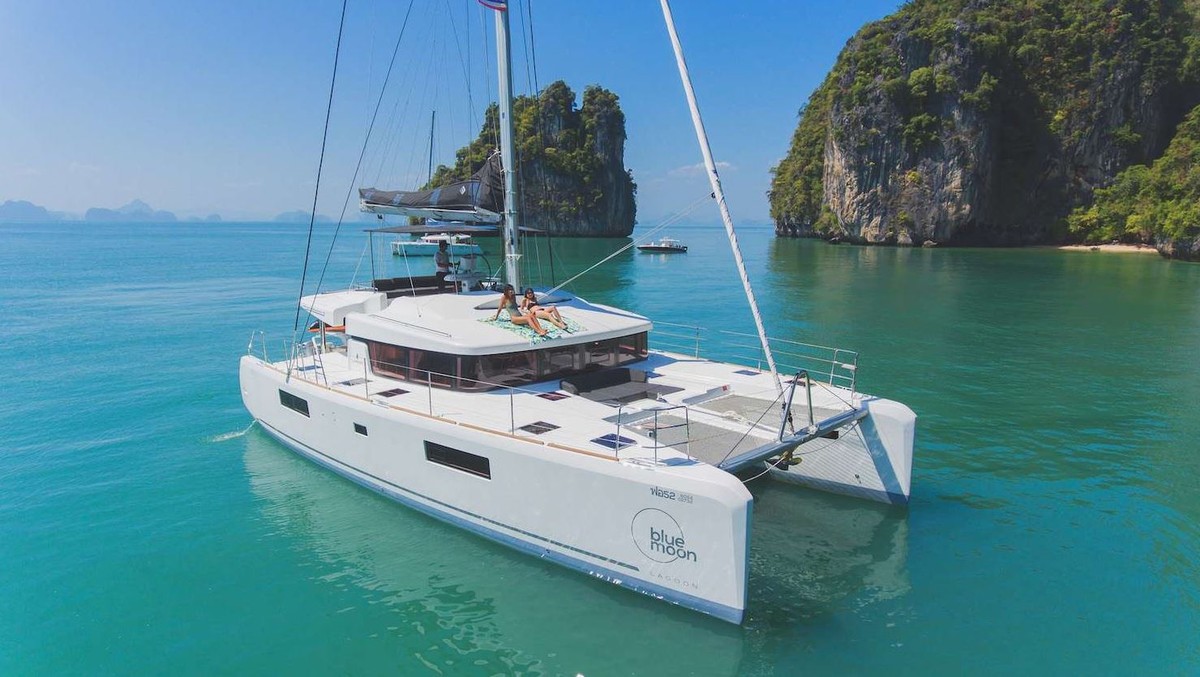
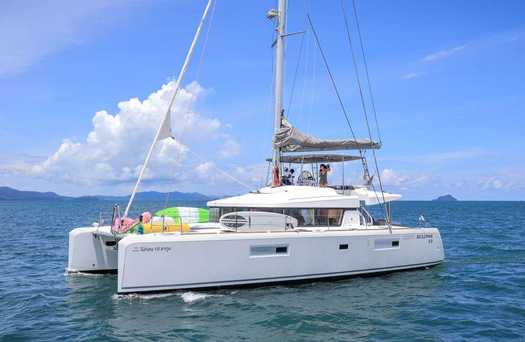
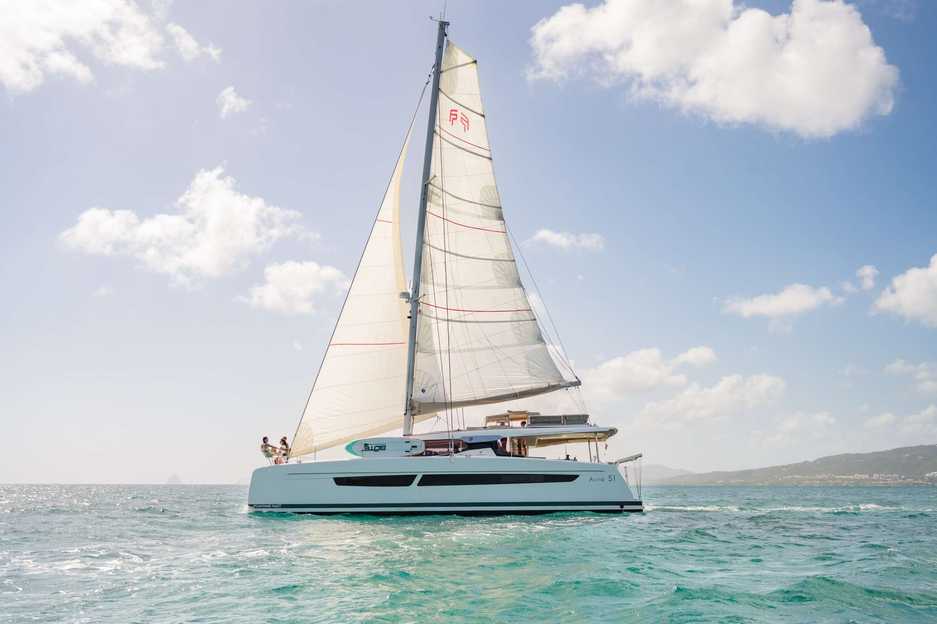
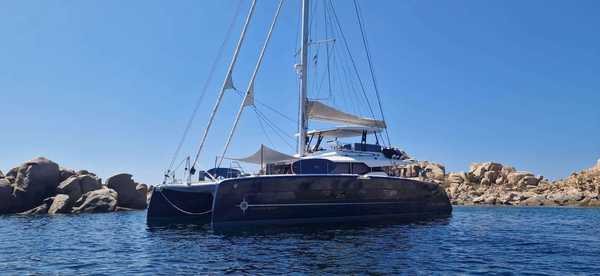
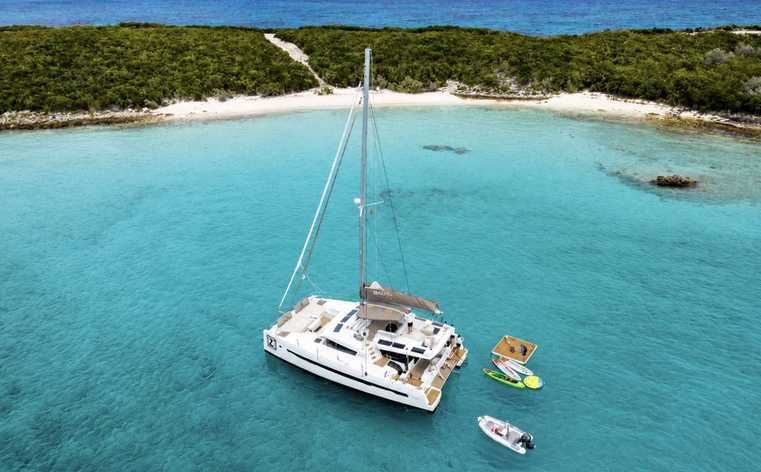
Catamarans for a Caribbean or Mediterranean week
Wide, stable decks and shallow draught — the hull shape that suits long swim stops and short hops between anchorages, in either cruising ground.



FAQ
Frequently Asked Questions
When does the Caribbean charter season start and end?
Am I quoted in euros or dollars, and how is the deposit paid?
How many days should I allow either side of a Mediterranean charter?
Which week is the most expensive for a Caribbean charter?
Is seven nights long enough for a charter from the US West Coast?
Start Planning
Get Your Charter Quote
Tell us about your dream charter and receive a bespoke proposal within 24 hours.